
They’ve zoomed in on photos, compared before-and-afters, read Reddit threads, and wondered why some veneer cases look natural while others seem obvious from across the room. They’re trying to understand what actually happens during treatment and whether the results will still feel like their own smile.
That’s where a smile makeover at Dentistry For Life gets more nuanced than social media makes it look.
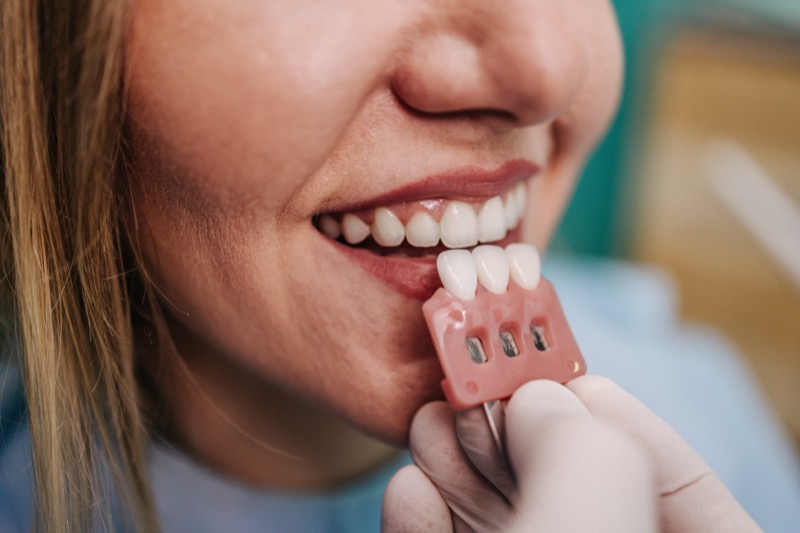
Porcelain veneers can address chipped, discolored, unevenly sized, or misshapen teeth, as well as other cosmetic concerns. The final result depends on the planning, preparation, and decisions made before veneer placement begins.
What Is a Smile Makeover?
A smile makeover is a personalized treatment plan that combines one or more cosmetic dentistry procedures to improve the appearance of your smile.
For some patients, porcelain veneers are the primary treatment. Others may benefit from teeth whitening, dental bonding, gum contouring, clear aligner trays, or restorative dentistry before veneers are placed.
A cosmetic dentist looks at facial esthetics, tooth proportions, gum tissue, bite alignment, and the condition of the natural teeth before recommending treatment. Every detail affects how the smile sits on the face.
Sometimes, veneers are the main treatment, and sometimes they play one part in a larger plan.
Why Porcelain Veneers Are So Popular
Porcelain veneers remain one of the most versatile tools in cosmetic dentistry because they can address multiple concerns at once.
A single treatment may improve:
- Chipped teeth
- Broken teeth
- Discolored teeth
- Small gaps
- Uneven tooth length
- Misshapen teeth
- Minor alignment concerns
- A gummy smile, when combined with gum contouring
Porcelain is stain-resistant and tends to maintain its appearance longer than composite bonding or composite veneers.
Patient selection still matters. Teeth whitening, dental bonding, traditional braces, clear aligner trays, or dental crowns may be a better fit depending on the condition of the teeth.
The Consultation: Where Most Decisions Are Made
Many patients assume the porcelain veneers procedure starts when the teeth are prepared.
The consultation carries much of the real weight.
A cosmetic dentist evaluates the health of the teeth and gums, reviews oral hygiene habits, and discusses what the patient wants to change. Photographs, digital imaging, and impressions may be taken to help plan the final result.
This is where expectations get specific.
Some patients want a whiter smile. Others want to correct chipped teeth or improve symmetry. Some are concerned about a gummy smile. Others want a broader smile transformation after years of wear, dental repairs, or discoloration.
The treatment plan should reflect those goals while respecting the condition of the natural teeth.
Will My Natural Teeth Be Shaved Down?
This is usually the first question patients ask.
Most porcelain dental veneers require some enamel removal. The amount varies by case, though a small portion of natural tooth enamel is typically reshaped to create room for the veneer.
That space is important because without it, veneers can look bulky or oversized.
A good cosmetic dentist removes only the amount of natural tooth structure needed for a stable, natural-looking result.
No-prep veneers can work in select cases. They are most appropriate when the teeth are small, slightly set back, or already have enough room for added porcelain. If the teeth are crowded, prominent, or bulky to begin with, no prep veneers can make the smile look heavy.
The Temporary Phase
After the teeth are prepared, impressions or digital scans are sent to a dental laboratory.
This is where the case starts to take shape outside the dentist’s office.
A dental lab technician fabricates custom veneers based on the treatment plan, photographs, tooth shape, facial proportions, and color goals discussed during the consultation.
Because the final veneers take time to create, many patients wear temporary veneers while the dental laboratory completes the case.
The temporary phase gives patients a preview of the shape, tooth length, and overall appearance before the final veneer placement appointment. Small changes can still be made here.
The Role of the Dental Laboratory
Patients spend most of their time with the dentist, but the dental lab plays a major role in the final result.
The quality of porcelain dental veneers depends on communication between the cosmetic dentist and the dental lab technician creating the restorations.
Color, translucency, surface texture, tooth shape, and facial proportions all affect whether veneers look believable. Strong veneer cases blend with the lips, gums, and surrounding features.
Are Veneers Permanent?
Porcelain veneers are considered a permanent cosmetic procedure because enamel removal is usually required.
Once natural tooth enamel has been removed, the tooth will continue to need coverage moving forward.
Veneers do not need constant replacement. With proper care, porcelain veneers last many years. Some patients keep their veneers for well over a decade before replacement becomes necessary.
Longevity depends on bite forces, oral hygiene, grinding habits, regular dental visits, and routine dental care.
What About Other Options?
Porcelain veneers are one option within a smile makeover.
Some patients achieve excellent results with:
- Teeth whitening
- Composite bonding
- Dental bonding
- Composite veneers
- Gum contouring
- Clear aligner trays
- Dental crowns
- Dental implants for replacing missing teeth
- A dental bridge or partial dentures when teeth are missing
The best cosmetic dentistry procedures depend on the condition of the teeth and the patient’s goals.
Whitening may be enough for healthy teeth with discoloration. Composite bonding may correct a small chip in one tooth. Dental implants may be needed before cosmetic treatment if missing teeth are part of the concern.
A smile makeover works best as a sequence, with each step planned around the next.
How Much Do Porcelain Veneers Cost?
Porcelain veneers cost varies depending on the number of veneers being placed, the complexity of the case, the materials used, and the dental laboratory involved.
In general, porcelain veneers’ ranges are higher than composite veneers because porcelain requires custom fabrication by a dental lab and tends to last longer.
Since veneers are considered a cosmetic procedure, dental insurance typically provides little or no coverage. Patients should discuss cost, financing options, and treatment sequencing during the consultation.
Caring for Veneers After Placement
Porcelain veneers are durable, but they still require maintenance.
Patients should continue:
- Brushing and flossing daily
- Attending regular dental visits
- Maintaining strong oral hygiene habits
- Wearing a nightguard if grinding is present
- Visiting the dentist regularly for examinations and cleanings
Veneers cannot develop cavities, but the natural teeth underneath and around them still require care. Gum disease, tooth decay, and poor oral hygiene can affect the long-term success of veneer treatment.
Porcelain Veneers Can Be A Great Addition to Your Smile Makeover
The porcelain veneers procedure involves more planning than most patients expect. The consultation, tooth preparation, temporary veneers, dental laboratory work, and final veneer placement all shape the result.
For many patients, porcelain veneers become the centerpiece of a smile makeover. Teeth whitening, composite bonding, gum contouring, dental crowns, dental implants, or other cosmetic dentistry procedures may also be part of the plan.
Strong smile makeovers start with the real condition of the teeth, gums, bite, and face. The porcelain comes later.